AI ART IS MISSING THE POINT
AI art is ruining the creative process for the sake of saving time, enhancing creative abilities, and "progress," and its defenders are missing the entire point.
Last week, I created a collage using a vintage J-Card from a Bruce Springsteen “Born to Run” cassette. I had the concept written down, a vivid vision in my mind of what it would look like, and the confidence that it would take 30 minutes TOPS. But that afternoon, I unknowingly walked into Clown Town and remained there for 3 HOURS as I got humbled for being so foolish and arrogant.
Instead of throwing a fit, I embraced it; this minor detour is all part of the creative process. But I did start thinking about AI art, the people who defend it, and how it is ruining the creative process. My friend and fellow artist Logan Schmitt recently filmed an Instagram reel on this topic, so forgive me if I’m repeating some of what he already said, but beating a dead horse is what I do best.
AI ARTISTS AND DEFENDERS LACK TALENT
I’m going to start with my harsh hot take: I believe that people who defend AI art and/or utilize AI for artistic purposes are insecure about their lack of talent and creative problem-solving skills. They are self-conscious about thinking they need to consult AI to create art, so they find ways to justify it to make themselves feel better.
Now, I am not going to sit here and act like I’m a creative genius or that I don’t have frequent meltdowns about how I’m a fraud who just ran out of her last good idea. My life was built on imposter syndrome, honey. I can’t even muster the ability to call myself an “artist.” If you are a close friend of mine, you have undoubtedly received a panicked text from me saying something like, “Well, I haven’t created a collage in a month, so I guess I’ve run out of every single possible idea and was never truly an artist.”
While I have said that countless times, that statement has never been true. Why? Because I solved the problem and made it through the creative block.
PROBLEM SOLVING IS THE POINT OF ART
I’ve seen every argument under the sun for AI, but here are some of my favorites:
AI helps people develop artistic ideas and enhances your natural skills
It speeds up the creative process, allowing people to see the art before they make it or cut down on the more challenging parts so that they can finish it faster
It evokes a strong reaction and makes people uncomfortable, which is what good art does
It’s just new technology that emerges, like it has for centuries
It doesn’t really affect artists’ lives as much as we think
There are so many problems with every single one of these arguments, but let’s start with the overarching theme that AI art is a helpful tool that enhances creativity and improves one’s art. This idea misses the entire point of what art is.
Art isn’t just the finished product that you see at a local art gallery or on prints at an artisan market. The real art is the entire creative process - all of the meltdowns from ideas not manifesting correctly on paper, the fear of something not turning out the way you plan, the physical pain from standing or sitting for hours in weird positions like a goblin while creating, the mistaken cuts and slices that jeopardize an entire piece, not being able to find the right images, the feeling that nothing is coming together correctly, the lack of certain tools and skills, the frustration from creative blocks, and even the occasional sleepless night lying in bed trying to figure out how to make it work.
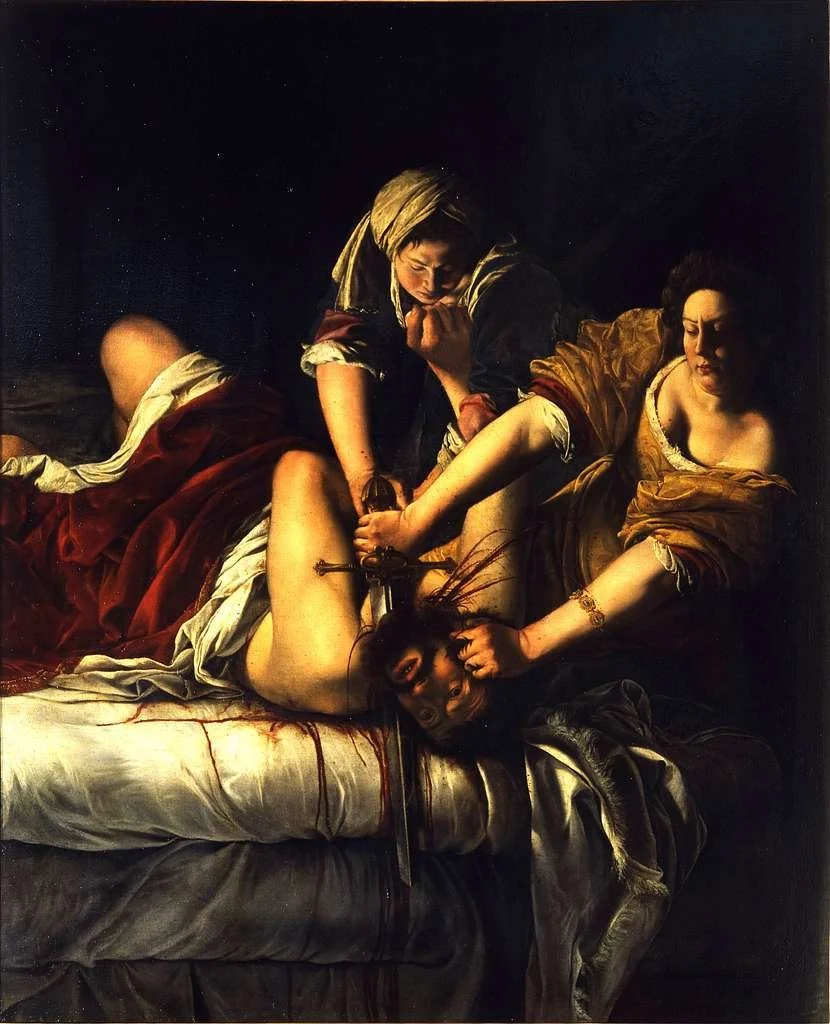
Art is also the context. Does knowing that Artemisia was raped at 18 change your perception of her violent and feminist interpretation of “Judith Slaying Holofernes?”
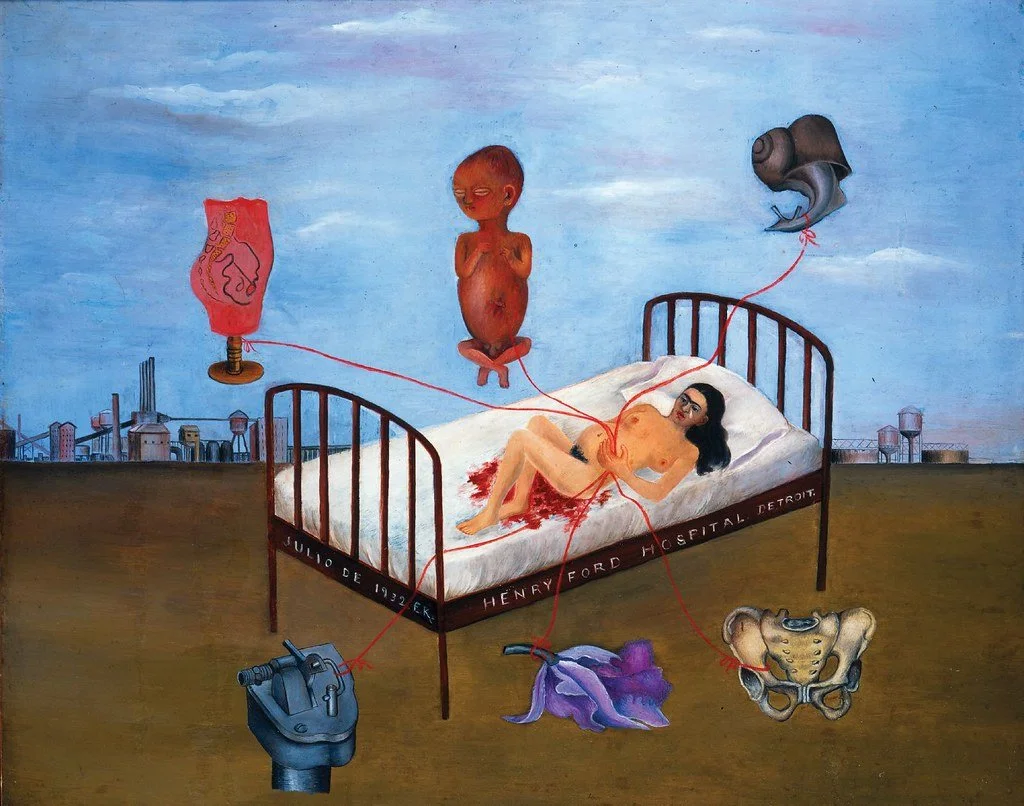
Or how about knowing that Frida Kahlo was in a bus accident that not only left her with broken bones in her spinal column, ribs, legs, and pelvis, but also a punctured uterus and abdomen when a handrail impaled her. As a result, she developed Asherman’s syndrome and became infertile. Does that change how you view her painting, “Henry Ford Hospital?”
What’s the context of AI art? Someone suffered from heartbreak and typed in a prompt using their Cheeto-dusted keyboard, and maybe it took ten minutes to make because the two subjects’ legs were blending into one another, so that needed to be corrected? What a struggle that must have been to create!
When you use AI to evade the creative process, you’re robbing yourself of the best part of creating and losing the brain capacity to resolve the issues. Ultimately, working through your limitations is how you improve and become a better artist. Those experiences are the real art.
For example, as a collage artist, my most significant challenge is that everything I create is dependent on what I have. When I see an image in my head of a collage I want to make, I have to spend hours searching through my folders and magazines to find the exact (or close to exact) image I need. If I never find those images, it’s filed away in the folder of unfinished projects in my brain, which is frustrating. But, when I do find those images, they’re often slightly different - maybe the flower I want to use is a different color or the woman is posed in the opposite direction in which I need her to be. Those unexpected challenges mean that I have to overcome my limitations and figure out ways to solve the puzzle.
The “Born to Run” J-card collage I mentioned earlier is another perfect example of the creative process in action. Saturday afternoon, I spent a couple of hours exploring magazines and searching for images I liked so that the next day I’d be ready to get to work. I thought the hardest part was done, but 24 hours later, I found myself struggling with non-stop challenges like mismatching colors, backgrounds that didn’t go with the themes I wanted to portray, and a general lack of images I envisioned in my head. At one point, I almost gave up. Fortunately, I am incredibly persistent and decided to keep suffering through the shame of feeling like a charlatan. When the frustration peaked, I opened up one of my vintage Playboys and immediately saw a Firestone tire ad, which created a spark in my brain. Just that single image was what I needed to bring the entire collage together. From there, everything flowed.
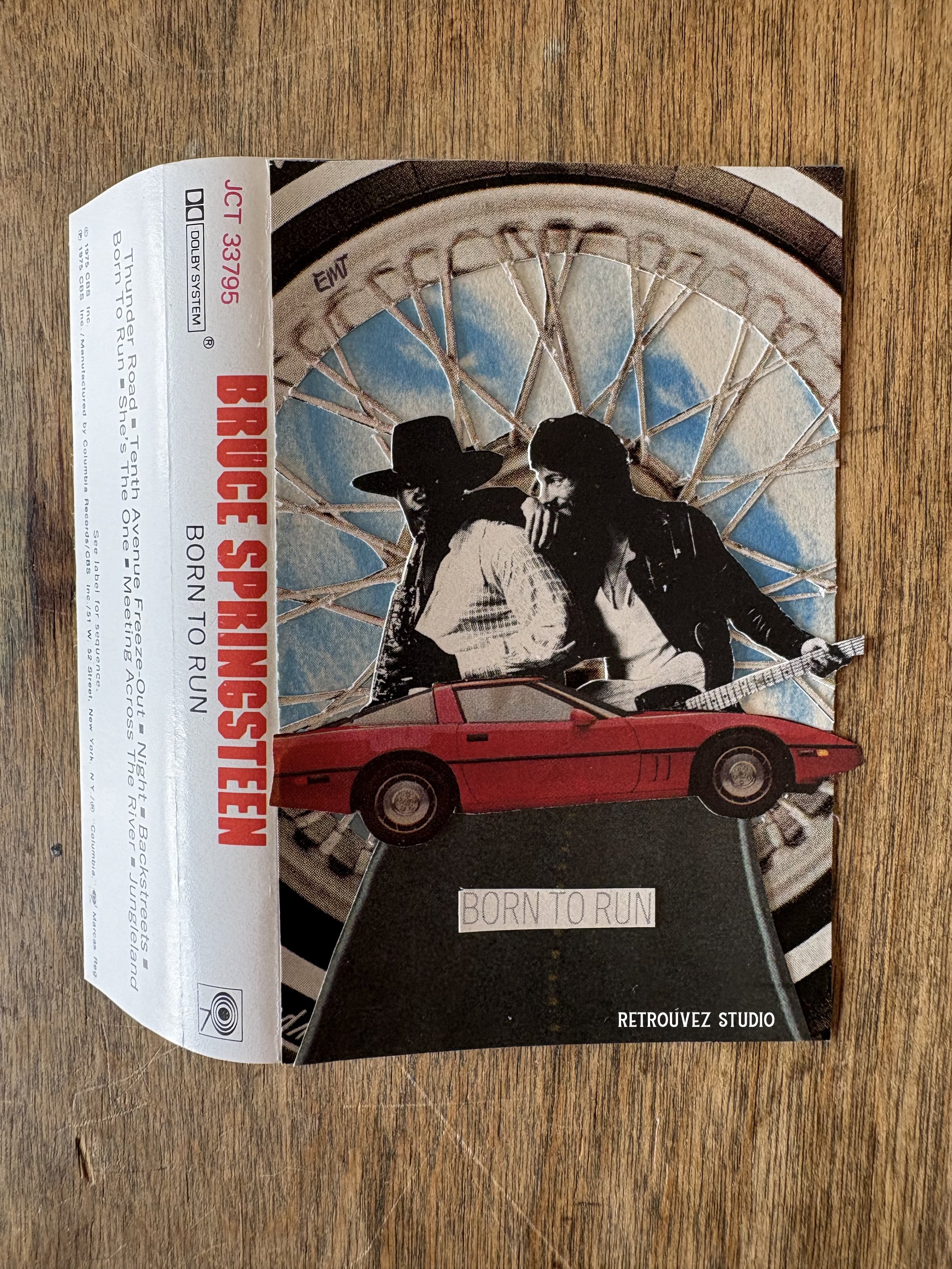
Sticking with it and thinking through it ultimately led to me to create something even better than what I originally imagined. If that ain’t the best part of creating art with a human brain, I don’t know what is.
“AI ART GOOD BECAUSE IT’S CONTROVERSIAL”
The other argument that makes me wish I was as ignorant as the people spouting this nonsense is: “Good art is controversial. AI art is controversial. Therefore, AI art is good art.” Hop back into philosophy class, honey, because that is one hell of an equivocation and you need to learn how to argue with logic.
A piece of art is controversial for a variety of reasons, but one of the main reasons is because it defies the status quo and challenges societal norms. How is AI art opposing societal norms when our own government is forcing it down our throats and encouraging other government agencies and citizens to use it? Wouldn’t that make AI art the norm and handmade art the resistance? Doesn’t that mean using AI art makes you a bootlicker and a government stooge? (Yes.)
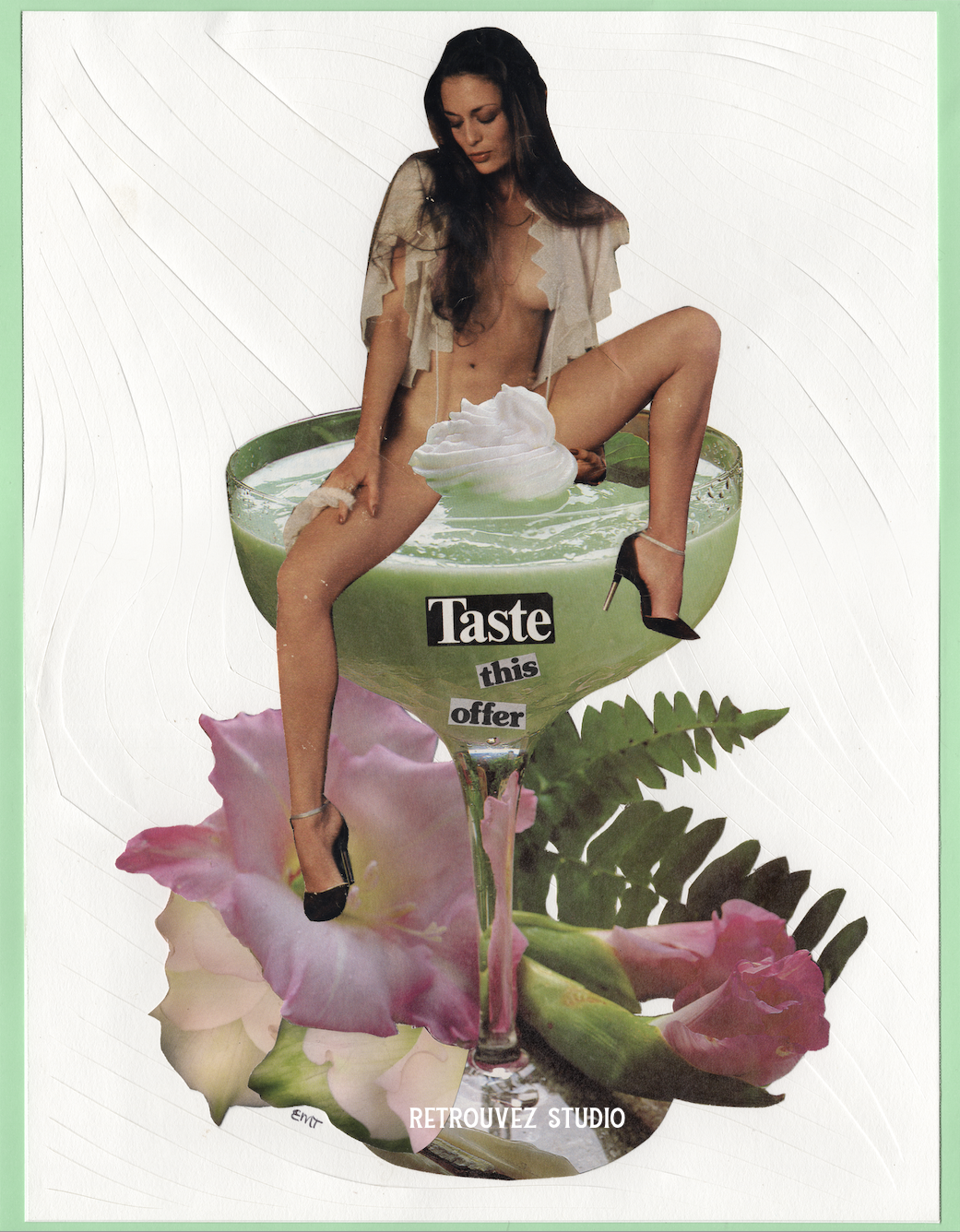
As someone who has made plenty of art that scandalizes people who are casually perusing an artisan market looking for a handmade wooden “Gather” sign for their kitchen and suddenly stumble across a print of a woman sitting spread-eagle on top of a martini glass with the words “Taste This Offer” written across the page, I know a thing or two about controversial art. I certainly make some art for the family, but most of my art exists to challenge people. I want people to look at a collage featuring a nude woman and ask themselves why they just said “that’s scary,” and fled my tent (true story). I want people to see a collage I made criticizing religion and ask themselves why it makes them feel uncomfortable and/or guilty.
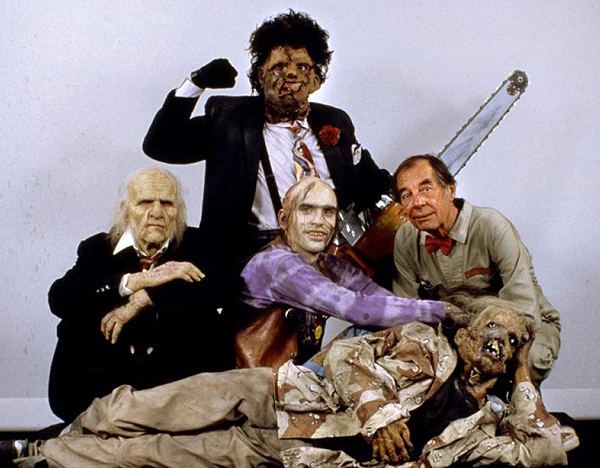
The discomfort people feel when looking at AI art (besides realizing that the woman in the image only has three fingers and looks like a member of the Sawyer family) is because it is uncanny, lacks any depth or soul, is stolen art, and has unethically utilized the natural resources we need for survival. This is a completely different type of discomfort from the one people experience when looking at handmade art.
“AI ART IS THE FUTURE OF ART”
I’ve seen many people make another obtuse argument about the “future of art” topic. They believe that using AI to create art is okay because art evolves with society and technology.
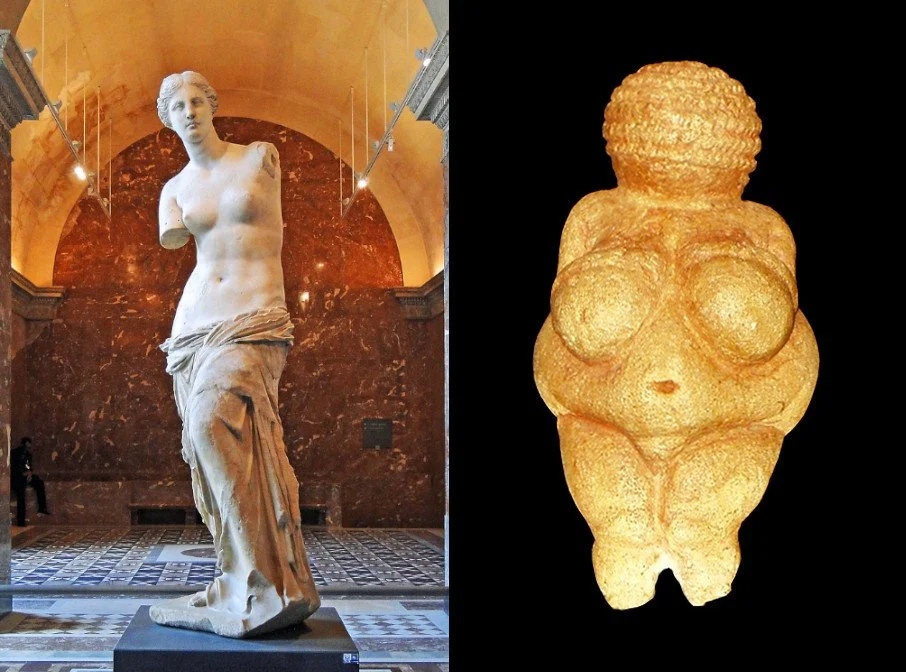
It is certainly true that art progresses alongside the expansion of technology, knowledge, and society. This is visible when you compare, for example, the Paleolithic Venus of Willendorf to the Hellenistic Venus de Milo. They are sculptures with similar themes and subjects, but are ultimately two distinct interpretations of women, shaped by the time periods in which they were created.
But perhaps the more applicable example is the Modern Art Movement. Artists who worked in the styles of Dadaism, Surrealism, Cubism, and Abstract Expressionism (to name a few) sought to challenge the elite, reject traditional artistic boundaries, create using unusual materials and tools, experiment with new technology, and embrace abstraction and subjectivity.
You may be thinking, “Well, you mentioned that the Modern Artists utilized technology to create art - isn’t that what AI ‘artists’ are doing?” No, actually. While Modern Art is obscure and unusual, the emotional core and authenticity remain ever present. AI trains itself by scanning websites and social media platforms and stealing art from skilled artists without their consent. People want to act like typing in “create a green turtle wearing sunglasses reclining on a pink chair at the beach while sipping a mojito in the style of Studio Ghibli” makes them some sort of creative genius. In reality, those images are regurgitated bits and pieces of other artists’ works that took hours to develop and create, all so that some AI “artist” can take that vomit and walk away feeling like they made something new and have an ounce of talent. Instead, they’re complicit in stealing artwork, ruining small businesses, and lacking any ethical standard or moral code.
“AI ISN’T ACTUALLY THREATENING ARTISTS”
I’ve seen so many people argue that AI is here to stay and we need to work alongside it or else we’ll miss out on opportunities. They claim it isn’t jeopardizing people’s careers, hobbies, or businesses. Listen, if you don’t know at least ONE creative whose job is in jeopardy or one small business whose products are now being stolen and used by scammers, then you need to get out more and talk to a human in your community instead of your little chatbot. =/
I know people who’ve been let go from their design jobs because businesses are using AI slop to promote their services instead. I’ve seen artists discuss how not only did scammers steal their art, but also big brand names like Target. I’ve watched artists share how they were shopping on Etsy and saw an incredibly successful account selling an exact AI copy of their painting. I’ve seen countless AI videos that portray a stranger cruelly denigrating an artist’s work at a vendor fair, resulting in the “artist’s” social media account begging people to buy their “art.” And what’s most insidious about these videos is that they feature REAL WORKS OF ART. I can’t tell you how many videos I’ve seen of the real artists sharing those clips to warn people that whoever made them used their artwork (and sometimes even their faces).
One of the more disturbing stories I came across involved AI scammers targeting a small business. The scammers created an account claiming to be the business, and when people ordered a product, it never arrived. As a result, buyers began leaving nasty reviews claiming that the small business owners were scammers, and now the owners are dealing with a crumbling business as they do damage control. But, sure, AI art isn’t harming artists…
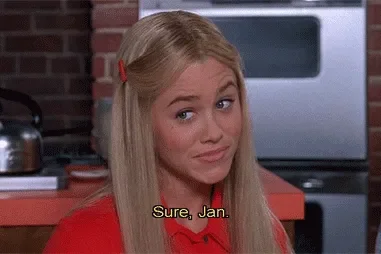
Something else I’d like to point out regarding the “AI isn’t threatening artists” argument is that it negates the stance that AI is a fun tool to enhance art and streamline the process. Stating that “it’s here and you have to use it or else you’ll fall to the wayside” sounds threatening, as if we have no choice but to use it or fail. So, which is it? Is AI some fun, exciting, benevolent tool we can use to become better artists, or is it a sinister force asking us to join or die? Pick a lane.
THERE IS STILL HOPE FOR YOU
I want to end this blog by talking to the people who are defending AI art or using AI to create “art.” I know I called you talentless losers, but there’s still hope for you. It’s not that you’re talentless; you’re just lazy and insecure. You aren’t allowing yourself to create at your fullest potential because you’re so weighed down by AI and the thought that you don’t have the skills, and it’s not doing you any favors; it’s making you dumber and less creatively inclined.
The more you create using only YOUR BRAIN, the easier it becomes. I had no idea I could create surreal scenes (for some reason my brain just didn’t think like that) until I saw collage artist Maya Land doing it. Her artwork inspired me to start collaging again after I hit a slump for several years. I spent time experimenting with collage and making the ugliest pieces of art ever created, but they were crucial for my creativity and skill development because they allowed me to play, open my mind, and find my own style.
Everyone has a spark of creativity within them, whether it is photography, writing, cooking, baking, interior decorating, painting, designing, etc. That means that your brain has everything it already needs to create something incredible; you just need to find the inspiration, embrace your limitations, and challenge yourself, then watch your creativity flourish.